
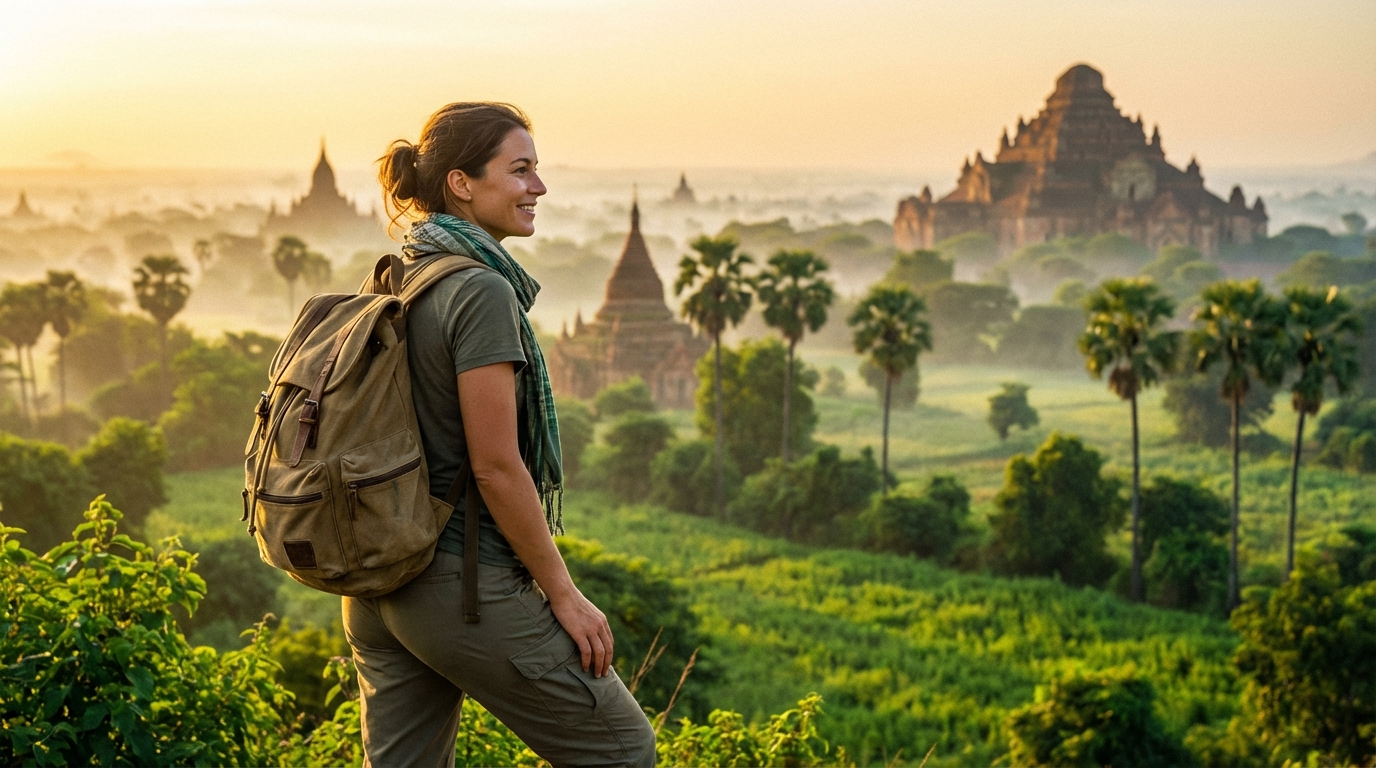
Think long-term backpacking is too expensive in 2026? Think again! While global prices are rising, Southeast Asia remains the world’s best region for budget travelers. Whether you want to explore the lush jungles of Vietnam, the stunning beaches of Thailand, or the hidden temples of Laos, you can still do it all for under $30 a day—if you know the secrets.
Is $30 a Day Really Realistic in 2026?
Yes, it is! While $30 might seem low, in countries like Vietnam, Laos, and Northern Thailand, this budget can easily cover a comfortable hostel bed, three delicious local meals, and even a few cold beers or a local tour.
Who is This Guide For?
This guide is designed for anyone who wants to see the world without breaking the bank, specifically:
- Backpackers looking for the classic “banana pancake trail” experience.
- Solo Travelers who want to meet people while staying on a budget.
- Digital Nomads looking for affordable hubs with great Wi-Fi.
- Students and First-Time Travelers planning their first big adventure.
What We Will Cover
In this ultimate guide, we’re going to break down everything you need to stay under your $30 daily limit. We will cover:
- The cheapest countries to visit right now.
- Smart accommodation hacks (Hostels vs. Guesthouses).
- How to find the best street food for just a few dollars.
- Budget-friendly transportation tips (Night buses, trains, and local rides).
- Practical ways to save on visas and hidden fees.
Get ready to turn your travel dreams into reality without spending a fortune!
Can You Really Travel Southeast Asia for Under $30 a Day in 2026?
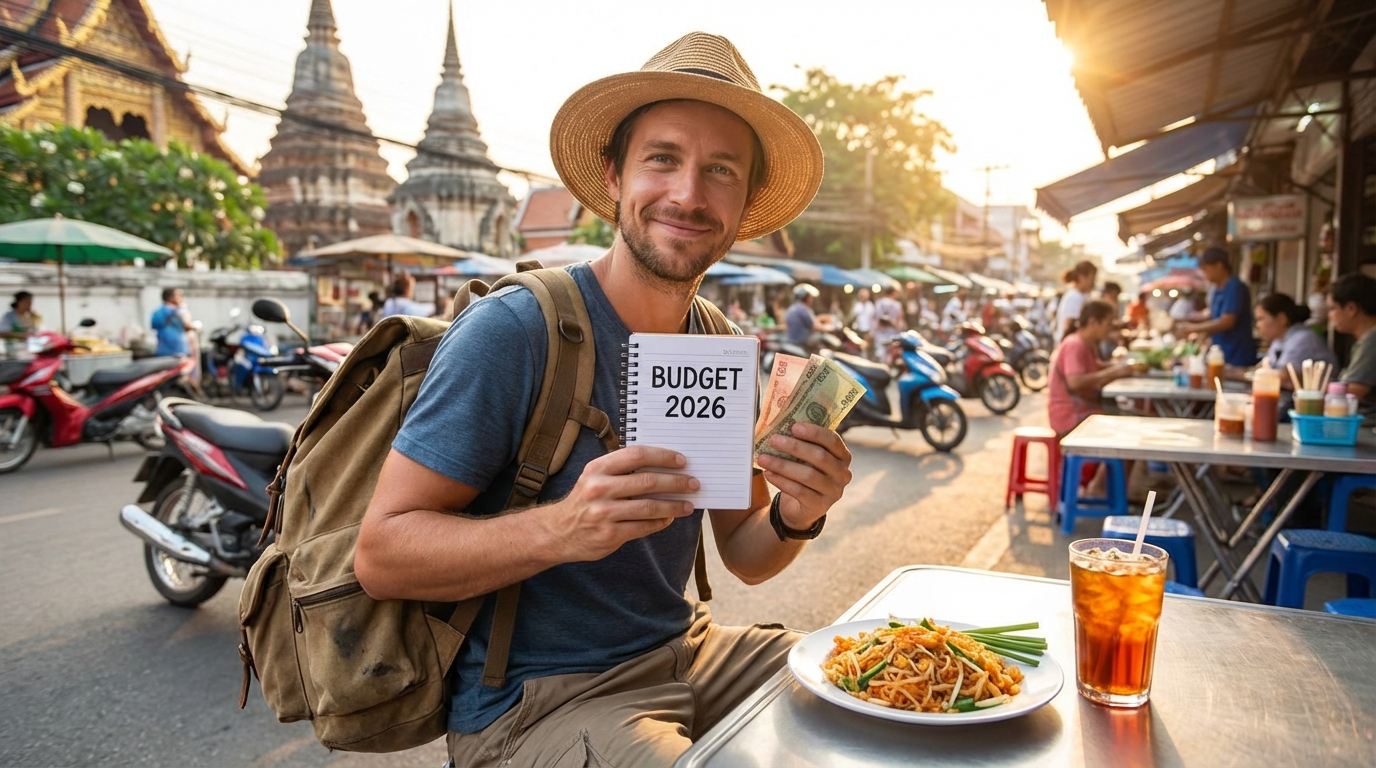
The short answer is YES! Even in 2026, Southeast Asia remains remarkably affordable. However, staying under a $30 daily budget requires a bit of smart planning and a local-first mindset.
While it is absolutely possible to explore this beautiful region on a shoestring budget, there are a few important things to keep in mind:
- It’s Not Every City: While $30 goes a long way in Hanoi or Luang Prabang, cities like Singapore or certain parts of Bali will be much harder to navigate on this budget.
- Travel Style Matters: To stay under $30, you’ll be choosing cozy dorm beds over luxury hotels, delicious street food over fancy restaurants, and local buses over private taxis.
- Slow Travel is Key: The more you move, the more you spend on transport. Staying in one place for 4-5 days helps keep your daily average low.
Best Countries for a $30/Day Budget in 2026
Not all countries are created equal when it comes to your wallet. Here is a quick breakdown of where your money lasts the longest:
| Budget Level | Countries |
| Super Budget Friendly | Vietnam, Laos, Cambodia, Sri Lanka |
| Mid-Range Budget | Thailand (North), Indonesia (Outside Bali), Malaysia |
| High Budget (Difficult) | Philippines (due to island hopping costs), Singapore |
Quick Tip: In 2026, Vietnam and Laos are still the kings of budget travel. You can often find a clean hostel bed for as low as $5-$8 and a filling meal for under $2!
What “Under $30 a Day” Actually Means (The Reality Check)
When we talk about traveling Southeast Asia on a $30 daily budget, we aren’t just talking about your hotel and food. To stay on track, you need to understand the difference between your Daily Living Budget and your True Travel Budget.
The secret is all about the “Daily Average.” Some days you might spend only $18 (like a chill day on a beach in Vietnam), while other days—like when you take a long bus or buy a temple pass—you might spend $45. The goal is to keep the overall average under $30.
A. Your Daily Living Budget ($20 - $25)
This is what you spend every single day just to “exist” comfortably:
- Accommodation: A clean bed in a highly-rated social hostel or a budget guesthouse.
- Food: 2-3 delicious street food meals plus some local snacks or fruit.
- Local Transport: Renting a scooter for the day or using local “Tuk-Tuks” and Grab bikes.
- Sightseeing: Entry fees to smaller temples, museums, or a park.
- Extras: A cup of local coffee, a large bottle of water, and maybe one cold beer at sunset.
B. Your True Travel Budget (The "Extra" Costs)
These are the costs that pop up every few days and can break your budget if you aren’t careful:
- Intercity Travel: Long-distance buses, trains, or slow boats between cities.
- Visas: Entry fees for countries like Cambodia or Laos (usually $30-$40).
- SIM Cards: High-speed mobile data for a month (usually $10-$15).
- Laundry: Getting your clothes washed at a local shop (usually $1-$2 per kg).
- Adventure Activities: Bigger experiences like Scuba Diving, Hot Air Balloons, or multi-day trekking tours.
The "Buffer" Rule
Always keep a small “buffer” in your bank account for unexpected costs like a lost SIM card, a flat tire on a rented scooter, or an occasional splurge on a nice Western meal when you’re feeling homesick.
Realistic Southeast Asia Budget Breakdown for 2026

Planning your budget is easier when you see the actual numbers. Based on 2026 travel data, here is what you can expect to spend on average across the region. Keep in mind that prices in Vietnam or Laos will be at the lower end, while Thailand or Malaysia might be slightly higher.
1. Accommodation: Where You’ll Sleep
Your biggest saving will come from choosing the right bed.
- Hostel Dorms: $5 – $12 per night (The best way to meet people and save money).
- Private Budget Rooms: $15 – $25 per night (Great for couples or if you need a break).
- Local Guesthouses: $10 – $20 per night (Authentic and usually run by friendly local families).
2. Food & Drink: Eating Like a Local
Southeast Asia is a food lover’s paradise, and it’s incredibly cheap if you skip the fancy tourist spots.
- Street Food: $1.50 – $4 per meal (Think Pad Thai, Banh Mi, or Kottu).
- Local Restaurants: $4 – $8 per meal (Sit-down places with a menu).
- Western Cafés: $8 – $15 per meal (Good for an occasional treat or a coffee fix).
- Supermarket Snacks: $2 – $5 per day (Water, fruit, and light snacks).
3. Transport: Getting Around
Moving from A to B doesn’t have to be expensive if you use local options.
- Scooter Rentals: $5 – $8 per day (The ultimate freedom for exploring).
- Grab / Rideshare: $2 – $6 for short trips (Safe, easy, and transparent pricing).
- Buses & Trains: $5 – $15 for intercity travel (Night buses are great for saving on a night’s accommodation!).
- Ferries: $10 – $25 (Mainly for island hopping in Thailand or the Philippines).
4. Activities: Having Fun
Don’t forget to budget for the experiences that make travel memorable.
- Temples & Museums: $2 – $10 (Entry fees for most cultural sites).
- Waterfalls & Hiking: Free – $5 (Usually just a small parking or conservation fee).
- Snorkeling & Island Tours: $20 – $40 (Full-day boat trips with lunch included).
5. Other Essentials: The "Small" Costs
These add up, so don’t ignore them!
- Laundry: $1 – $2 per kg (Local shops are much cheaper than hotel services).
- SIM Cards / eSIMs: $10 – $20 per month (Essential for maps and staying connected).
- Drinking Water: $1 – $2 per day (Refill your bottle whenever possible to save money and plastic).
- ATM Fees: $5 – $7 per withdrawal (Try to take out larger amounts at once to minimize these fees).
Average Daily Cost Breakdown (2026)
To make it even simpler, here is a quick look at your estimated daily expenses. This breakdown assumes you are staying in highly-rated hostels and eating primarily local food.
| Expense Category | Budget Range Per Day (USD) |
| Accommodation | $5 – $12 |
| Food & Water | $6 – $10 |
| Local Transport | $2 – $5 |
| Activities | $3 – $8 |
| Miscellaneous (Laundry/SIM) | $2 – $5 |
| Total Estimated Daily Cost | $18 – $30 |
As you can see, most budget travelers will fall comfortably in the $18–$30 per day range, depending on your destination and travel pace.
If you spend more time in cheaper countries like Vietnam or Laos, your daily average might even stay below $20! However, if you move quickly between cities or enjoy a few more “western” comforts, you’ll likely hit the $30 mark. The key to staying on budget is finding the right balance that works for you.
Cheapest Southeast Asia Countries Ranked for 2026
Not every country in the region is equally budget-friendly. Here is our expert ranking of where your $30 a day will go the furthest in 2026.
1. Vietnam: The King of Budget Travel
Vietnam remains the easiest place to travel well on a tiny budget.
- Average Daily Cost: $18 – $25
- Best For: Incredible street food and stunning landscapes.
- Cheapest Areas: Hanoi, Ninh Binh, and Da Nang.
- Biggest Budget Trap: Luxury cruises in Halong Bay (choose a day trip instead!).
- Worth it under $30? Absolutely! You can live like a king on this budget.
2. Laos: The Slow Travel Paradise
Laos is perfect for those who want to escape the crowds and save money.
- Average Daily Cost: $20 – $28
- Best For: Waterfalls, river tubing, and a relaxed vibe.
- Cheapest Areas: Vang Vieng and the 4,000 Islands (Don Det).
- Biggest Budget Trap: Private taxis between cities (use the new high-speed train or local buses).
- Worth it under $30? Yes, it’s one of the most affordable spots in Asia.
3. Sri Lanka: The Hidden Gem of 2026
Sri Lanka offers a unique mix of beaches, mountains, and wildlife at an unbeatable price.
- Average Daily Cost: $22 – $30
- Best For: Train journeys, tea plantations, and surfing.
- Cheapest Areas: Ella, Kandy, and the Southern coast (Mirissa/Hiriketiya).
- Biggest Budget Trap: High entry fees for Sigiriya ($30). Plan your big sights carefully!
- Worth it under $30? Definitely, especially if you use the iconic trains and stay in local guesthouses.
4. Cambodia: More Than Just Temples
Cambodia is very affordable, though the US Dollar is widely used, which can keep prices steady.
- Average Daily Cost: $25 – $32
- Best For: Ancient history and rustic islands.
- Cheapest Areas: Kampot and Koh Rong Samloem.
- Biggest Budget Trap: The 3-day Angkor Wat pass ($62). It’s worth it, but budget for it!
- Worth it under $30? Possible, but you’ll need to watch your spending in Siem Reap.
5. Thailand: Great Value (If You Avoid the South)
Thailand is still great value, but popular islands can get expensive quickly.
- Average Daily Cost: $28 – $35
- Best For: Night markets, island hopping, and ease of travel.
- Cheapest Areas: Chiang Mai, Pai, and Chiang Rai.
- Biggest Budget Trap: Phuket and Koh Samui during peak season.
- Worth it under $30? Yes, in the North. In the South, you might need $40+.
6. Indonesia: Affordable Beyond Bali
While Bali’s hotspots are getting pricier, the rest of Indonesia is a budget dream.
- Average Daily Cost: $25 – $35
- Best For: Surfing, volcanoes, and cultural temples.
- Cheapest Areas: Yogyakarta (Java) and Lombok.
- Biggest Budget Trap: Beach clubs in Canggu and Seminyak.
- Worth it under $30? Yes, if you stay outside the main tourist bubbles.
7. Philippines: Beautiful but Tricky
The Philippines is stunning, but island hopping and flights can eat your budget.
- Average Daily Cost: $35 – $45
- Best For: World-class beaches and diving.
- Cheapest Areas: Siargao (if you surf) and Cebu.
- Biggest Budget Trap: Last-minute domestic flights between islands.
- Worth it under $30? Very difficult. You’ll likely need at least $40 a day here.
8. Singapore: The Honest Reality Check
Singapore is a world-class city, but it is not a budget destination.
- Average Daily Cost: $70 – $100+
- Best For: Modern architecture and clean city vibes.
- Worth it under $30? No. Even a hostel bed can cost $30. Visit for 2 days as a splurge, but not for long-term budget travel.
Where Your Money Goes Furthest in Southeast Asia
If you want to stay under that $30 daily limit, choosing the right cities is key. Some cities are massive budget-killers, while others feel like a bargain hunter’s dream. Here is where you should head in 2026:
1. Hanoi & Da Nang, Vietnam
Vietnam’s cities offer the best value for money in the entire region.
- Cost: Dorms $6–$9 | Private rooms $15–$22.
- Food: $1.50–$3 for a world-class meal (Banh Mi or Pho).
- Transport: Grab bikes are incredibly cheap ($1–$2 per ride).
- Best For: Foodies, culture lovers, and digital nomads.
2. Ella & Hiriketiya, Sri Lanka
Sri Lanka is perfect for those who want mountains and beaches without the high price tag.
- Cost: Guesthouses $10–$18 | Dorms $7–$10.
- Food: $2–$4 for a massive plate of Rice & Curry.
- Transport: The iconic blue train is just a few dollars! Scooters are $6–$8 per day.
- Best For: Surfers, hikers, and scenic train enthusiasts.
3. Chiang Mai, Thailand
The digital nomad capital of the world is still remarkably affordable in 2026.
- Cost: Dorms $7–$12 | Private rooms $18–$25.
- Food: $2–$5 at the legendary night markets.
- Transport: Renting a scooter is the way to go ($5–$7 per day).
- Best For: Digital nomads, temple hopping, and mountain vibes.
4. Luang Prabang & Vang Vieng, Laos
Laos is the ultimate “slow travel” destination where your dollar stretches incredibly far.
- Cost: Dorms $5–$8 | Private rooms $12–$20.
- Food: $2–$4 for local sticky rice and grilled meats.
- Transport: Walking and cycling are popular; local “Songthaews” are very cheap.
- Best For: Nature lovers, backpackers, and river tubing.
5. Yogyakarta, Indonesia
Forget the pricey beach clubs of Bali; Java is where the real budget magic happens.
- Cost: Dorms $5–$9 | Private rooms $15–$25.
- Food: $1.50–$4 for traditional Javanese meals.
- Transport: Cheap local buses and Grab are everywhere.
- Best For: History buffs (Borobudur Temple) and art lovers.
6. Siem Reap & Kampot, Cambodia
Cambodia offers a great mix of ancient history and a laid-back riverside atmosphere.
- Cost: Dorms $6–$10 | Private rooms $15–$25.
- Food: $3–$6 for local Khmer dishes and $0.50 draught beers!
- Transport: Tuk-tuks are the main way to get around ($2–$5 for short trips).
- Best For: History lovers and those who enjoy a “chill” riverside vibe.
7. Penang, Malaysia
Malaysia’s food capital is a bit more modern but still very budget-friendly.
- Cost: Dorms $9–$14 | Private rooms $22–$30.
- Food: $3–$6 for some of the best street food in the world.
- Transport: Excellent public buses and very affordable Grab rides.
- Best For: Street art fans and serious foodies.
How to Find Cheap Places to Stay (Without Sacrificing Comfort)
Your accommodation is usually your biggest daily expense. If you can keep this under $10–$12, staying under a $30 total daily budget becomes easy. Here is how the pros do it in 2026:
1. Choosing the Right Type of Bed
- Hostels: Best for solo travelers and meeting people. Dorms in Vietnam or Laos can be as low as $5–$8.
- Guesthouses & Homestays: Often better value than hostels for couples. You get a private room and a local experience for $12–$20.
- Monthly Discounts: Planning to stay in one spot for a while? Many places on Airbnb or Agoda offer 20-40% discounts if you book for 28 days or more.
2. Booking Strategy: Apps vs. Walking In
- Book Ahead for Popular Spots: If you’re heading to Ella, Sri Lanka, or Chiang Mai during peak season, book 2-3 days ahead on Agoda or Hostelworld.
- Negotiate in Person: For longer stays (3+ days), try walking into a guesthouse and asking for a “special price.” You can often save 10-15% by paying in cash directly to the owner.
- Compare Prices: Always check the price on the app first, then see if the property has a website or WhatsApp number for a direct (and usually cheaper) booking.
3. Avoid the "Instagram" Neighborhoods
- Places like Canggu (Bali) or Thamel (Kathmandu) are famous on social media, but they are also the most expensive.
- The Secret: Stay just 10-15 minutes away from the main tourist hub. You’ll save 30% on your room and find much cheaper local food.
4. Pro Tips for Maximum Savings
- Stay Longer: Moving every 2 days is expensive. Staying 1–2 weeks in one town helps you find the cheapest laundry, local markets, and hidden gems.
- Avoid Weekends on Islands: Prices in places like Koh Samui or Boracay skyrocket on Friday and Saturday. Try to visit these spots mid-week.
- Travel in the “Shoulder Season”: Visit just before or after the rainy season. The weather is still good, but prices are significantly lower.
How to Save Money on Food Without Missing the Best Meals
Food is one of the best parts of traveling in Southeast Asia. The good news? Some of the most delicious meals are also the cheapest. If you follow these habits, you can easily eat well for less than $10 a day.
1. Street Food is Your Best Friend
In countries like Vietnam, Thailand, and Indonesia, street food isn’t just cheap—it’s often better than restaurant food.
- The Secret: Look for stalls with a long line of locals. That’s how you know the food is fresh and tasty.
- A bowl of Pho in Hanoi or a Pad Thai in Bangkok will usually cost you between $1.50 and $3.00.
2. Eat Where the Locals Eat
If a restaurant has a menu in five different languages and “Western” music, it’s a tourist trap.
- Walk a few blocks away from the main tourist street. You’ll find local “Mom and Pop” shops where prices drop by 30-50%.
- In Sri Lanka, look for local “Hotels” (which are actually small eateries) for the most authentic and affordable Rice & Curry.
3. Smart Habits for Saving on Food
- Go for Lunch Specials: Many cafes offer “Set Lunches” which are much cheaper than their dinner menus.
- Limit “Western” Brunches: We all love avocado toast, but one Western breakfast can cost the same as three local meals. Stick to local breakfasts like Nasi Lemak or Roti Canai to save big.
- Shop at Local Markets: Buy your tropical fruits (mangoes, pineapples, bananas) and snacks from local markets rather than convenience stores like 7-Eleven. It’s fresher and much cheaper!
4. Drink Smart: Water and Coffee
- Refill Your Water: Buying plastic bottles every day is expensive and bad for the environment. Use refill stations at your hostel or look for public filtered water points.
- Local Coffee vs. Starbucks: Skip the expensive international chains. Try Vietnamese Iced Coffee or Sri Lankan Ginger Tea at a local stall for a fraction of the price.
- Budget Tip: In many parts of Vietnam, Cambodia, and Indonesia, eating primarily local food can keep your total food budget around $5–$8 a day.
The Biggest Budget Mistake: Moving Too Often
Transport is often the biggest “budget killer” for travelers in Southeast Asia. If you are constantly hopping from one island to another or taking flights every few days, your $30 daily average will disappear fast.
The Golden Rule: The easiest way to stay under $30/day isn’t just spending less—it’s moving less.
1. Why "Slow Travel" Saves the Most Money
When you stay in one place for 5–7 days instead of just 2, you save on long-distance bus tickets and expensive last-minute flights. Plus, you get to know the cheapest local spots, which saves you even more on food and coffee.
2. Overnight Buses vs. Short Flights
While a “cheap flight” might only cost $40, you also have to pay for transport to the airport and a night’s accommodation.
- The Pro Hack: Take an Overnight Sleeper Bus or a Night Train. You save on the ticket price AND you get a “free” night’s sleep without paying for a hostel.
- In countries like Vietnam and Thailand, sleeper buses are incredibly comfortable and very budget-friendly.
3. Trains: The Most Scenic Way to Save
If you are in Thailand, Vietnam, or Sri Lanka, use the trains!
- Sri Lanka’s trains are world-famous for their views and cost only a few dollars for a 6-hour journey.
- Trains are almost always cheaper than private taxis or domestic flights.
4. Ferries and Island Transfers
Island hopping in the Philippines or Southern Thailand can be expensive.
- Budget Tip: Use local slow boats or public ferries instead of “Fast Boats” or private speedboats. It takes a bit longer, but the savings are huge.
5. Be Careful with "Cheap" Flights
Low-cost carriers like AirAsia are great, but remember to add the costs of:
- Check-in baggage fees (often more than the ticket itself!).
- Airport transfers (taxis from airports to city centers can be pricey).
- Booking fees.
Final Verdict: Can You Still Travel Southeast Asia Cheaply in 2026?
So, is it still possible to travel Southeast Asia for under $30 a day in 2026? The answer is a resounding YES!
However, the days of “accidental” cheap travel are over. In 2026, staying on budget requires you to be an intentional traveler. It’s not just about choosing the cheapest countries like Vietnam or Sri Lanka; it’s about the habits you build along the way.
To keep your daily costs low while having an incredible experience, remember these four pillars:
- Slow Travel: Moving less often is your biggest money saver.
- Eat Local: Street food is fresher, tastier, and 70% cheaper than tourist restaurants.
- Avoid Tourist Traps: Look for hidden gems and local neighborhoods.
- Control Transport Costs: Use sleeper buses, trains, and Grab bikes instead of private taxis and frequent flights.
Southeast Asia is no longer the ultra-cheap secret it once was, but for smart travelers, it remains one of the best places in the world to stretch a budget without sacrificing experience. Whether you’re a solo backpacker or a digital nomad, the magic of the region is still waiting for you—and it doesn’t have to cost a fortune.
Ready to start your journey? Grab your backpack, book that flight, and see the world for less!